

Ultrasound
An ultrasound exam is a way of looking inside your animal’s body (heart, liver, kidneys, and intestines) without having to perform surgery. The ultrasound machine sends sound waves into the body and then listens for the echoes. The machine then uses these echoes to form a picture of the inside of your animal! Don’t worry, these sound waves are too high in pitch for us, or any of our patients, to hear and do not produce harmful effects as a diagnostic tool.
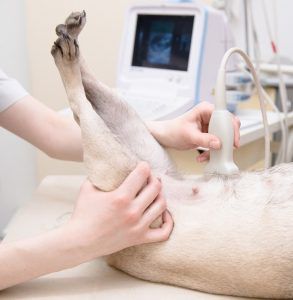
Ultrasound exams are performed for many reasons. In human medicine, most of us think about ultrasound exams during pregnancy. However, in veterinary medicine, because ultrasound is a safe way to look inside the body, it has become a very useful tool for many other situations.
Your veterinarian may have requested an ultrasound exam of your animal for one of the following reasons:
Pregnancy
Abnormal blood work
Vomiting or diarrhea that has lasted for a long time
Weight loss with no change in eating habits
Chronic infections
Change in urinary habits
Fluid in chest or abdomen
Irregular heart sounds or murmurs
Baseline ultrasound for future examination (geriatric patients)
Ultrasound allows veterinarians to examine internal organs for location, size, shape, texture and blood supply. Although, ultrasound does not always give us a clear picture of how well the specific organ is working, other tests such as bloodwork or additional imaging may be required. Our veterinarian will look at your animal’s medical history and current concern, as well as the entire ultrasound exam to make a diagnosis and recommendations for further tests.
Ultrasound Services
We care about your animal as much as you do and want the ultrasound exam to be a positive experience for both of you. Please feel free to ask us questions, we will do our best to provide you with the information you need.
CARDIAC
Cardiac ultrasound is used to detect:
Congenital heart disease
Heart murmurs
Heart failure
ABDOMINAL
Abdominal ultrasound is used to detect:
Cancers and other masses
Liver disease
Gall bladder disease
Pancreas disease
Kidney failure
Bladder problems
If you have any questions about our services, please contact us today at (928) 900-6303.